
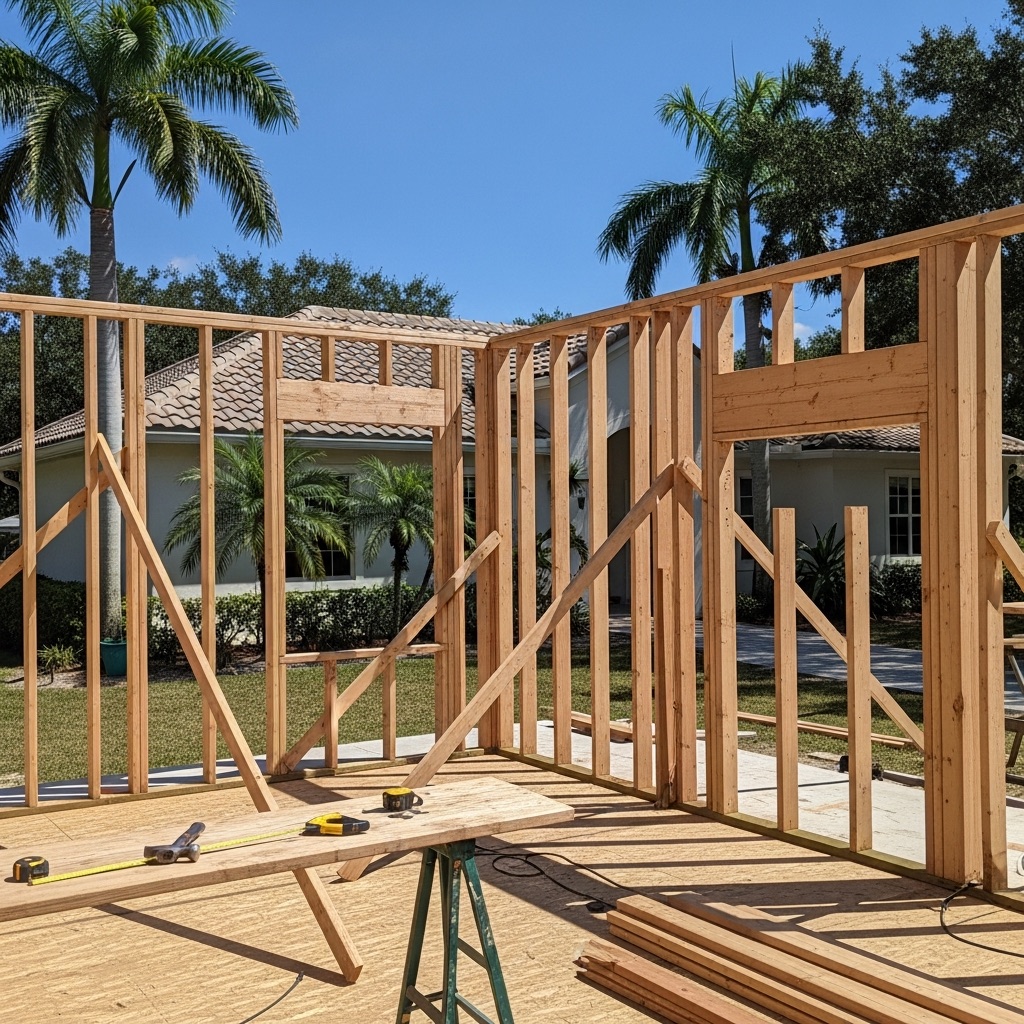
What Permits Do You Need for a Home Addition in St. Johns County, FL?
Adding space to your home in St. Augustine or anywhere in St. Johns County is one of the biggest construction decisions you will make. The permit process is one of the first things you need to understand before breaking ground. Florida's building codes are among the strictest in the country, shaped by hurricane requirements, energy standards, and flood zone regulations. Skipping or delaying permits does not just create legal risk. It affects your home's value, your insurance coverage, and your ability to sell.
This guide answers the questions homeowners ask most when planning an addition in Northeast Florida.
Do You Need a Permit for a Home Addition in Florida?
Yes. Any structural addition to a home in Florida requires a building permit through your local jurisdiction. This includes room additions, garage conversions, second-story additions, sunroom enclosures, and most covered patio builds. In St. Johns County, that means filing with the St. Johns County Building Services Department for properties in unincorporated areas. Properties within city limits use the City of St. Augustine Building Department.
Permits trigger inspections that verify the work meets Florida Building Code (FBC) requirements, including structural load, electrical, plumbing, HVAC, and fire protection standards. That verification protects you, your family, and the resale value of the home.
What Permits Are Typically Required for a Home Addition?
A standard room addition in St. Johns County typically requires a combination of the following permits:
Building Permit: Covers the structural work, including foundation, framing, roof, exterior walls, and windows.
Electrical Permit: Required any time new circuits, outlets, or panels are added or modified. Adding a bedroom or living space almost always triggers this.
Plumbing Permit: Required if the addition includes a bathroom, wet bar, laundry connection, or any water or drain line extension.
Mechanical Permit: Required when you extend or add HVAC ductwork, mini-splits, or ventilation systems to serve the new space.
In some cases, a single combined permit application covers all trades under one building permit number. Your contractor handles the routing based on scope and square footage.
How Long Does a Building Permit Take in St. Johns County?
Timeline depends on scope and current county workload. Simple additions under 1,000 square feet with no structural complexity typically take 4 to 6 weeks for permit approval. Larger or more complex additions, such as second-story builds, typically take 6 to 12 weeks. If the county requests revisions or corrections, add 2 to 4 weeks per round.
These are approval timelines, not total construction timelines. Most contractors submit for permit before mobilizing crews so the approval window runs in parallel with pre-construction planning. Permit timelines in Florida have extended since 2021 due to higher construction volumes and updated code cycles. Build that buffer into your project schedule from day one.
Can a Homeowner Pull Their Own Permit in Florida?
Yes. Florida law allows homeowners to pull their own permits for work on their primary residence under what is called the homeowner exception. However, pulling the permit yourself means you are the responsible party of record for code compliance. If the work fails inspection, you are responsible for remediation.
For a full home addition, most homeowners hire a licensed general contractor who handles all permitting, inspection scheduling, and permit closeout. The permit is pulled in the contractor's name, and the contractor's license is on the line, which aligns their incentives with getting the work done correctly.
What Happens If You Build Without a Permit in Florida?
Building without a required permit in Florida creates several serious problems.
Stop-work orders. St. Johns County and the City of St. Augustine can issue a stop-work order the moment unpermitted work is discovered, even midway through the project. Work halts until permits are retroactively pulled and inspections are completed.
Double-fee penalties. Most Florida jurisdictions charge double the standard permit fee for work started without a permit.
Insurance gaps. Homeowner's insurance policies typically exclude coverage for unpermitted structures. If an unpermitted addition is damaged in a storm or fire, the claim may be denied.
Title and sale complications. When you sell your home, unpermitted work surfaces during title search and buyer inspection. Lenders often require permits to be resolved before closing, which can mean retroactive permitting, partial demolition, or price reductions.
Code correction costs. If work does not meet current code, you may be required to open walls, tear out structural elements, and redo sections to pass inspection.
What Inspections Are Required During a Home Addition?
Florida's inspection sequence for a standard addition typically includes foundation and footings (before concrete is poured), framing and rough-in (after framing is complete but before drywall), rough electrical, plumbing and mechanical (in wall cavities before closing up), insulation (verified for Florida Energy Conservation Code compliance), and separate final inspections for building, electrical, plumbing, and mechanical.
Your contractor coordinates all inspection scheduling. In St. Johns County, inspections are typically scheduled online through the county's permitting portal and must be passed before the next phase of work proceeds.
Working With a Design-Build Contractor on Permitting
One advantage of the design-build model is that permitting is managed as part of the design and construction sequence. Wilson and Co Design Build handles permit applications, county coordination, and inspection scheduling as part of every home addition in St. Augustine and St. Johns County.
When the county requests corrections or clarifications during plan review, a design-build team can turn around revisions quickly because the same team that drew the plans is also building the project. That reduces permit cycle time and avoids delays that commonly arise when design and construction are handled by separate firms.
If you are planning a home addition in St. Augustine or St. Johns County, contact Wilson and Co Design Build at (904) 792-6175 to start the conversation.
Frequently Asked Questions
Do I need a permit for a covered patio addition in St. Johns County?
Yes, in most cases. A covered patio structurally attached to the home requires a building permit. Freestanding pergolas or detached shade structures may or may not require a permit depending on size and electrical involvement. Confirm with St. Johns County Building Services before starting.
How do I check permit status for a home addition in St. Johns County?
Permit status can be checked online through the St. Johns County PermitTrack portal. Your contractor provides the permit number at the time of application.
Does Wilson and Co Design Build handle permitting for home additions?
Yes. Wilson and Co Design Build manages the full permit process, including applications, plan submission, county coordination, and inspection scheduling, for every home addition project in St. Johns County and the City of St. Augustine.
What permits are needed for a bathroom addition in Florida?
A bathroom addition typically requires a building permit, a plumbing permit, and an electrical permit. If the addition requires extending or modifying HVAC, a mechanical permit is also required.
How far in advance should I apply for a building permit?
In St. Johns County, plan for 6 to 10 weeks between permit application and approval for a standard addition. Permits are required before construction begins, not issued at the start of work.
